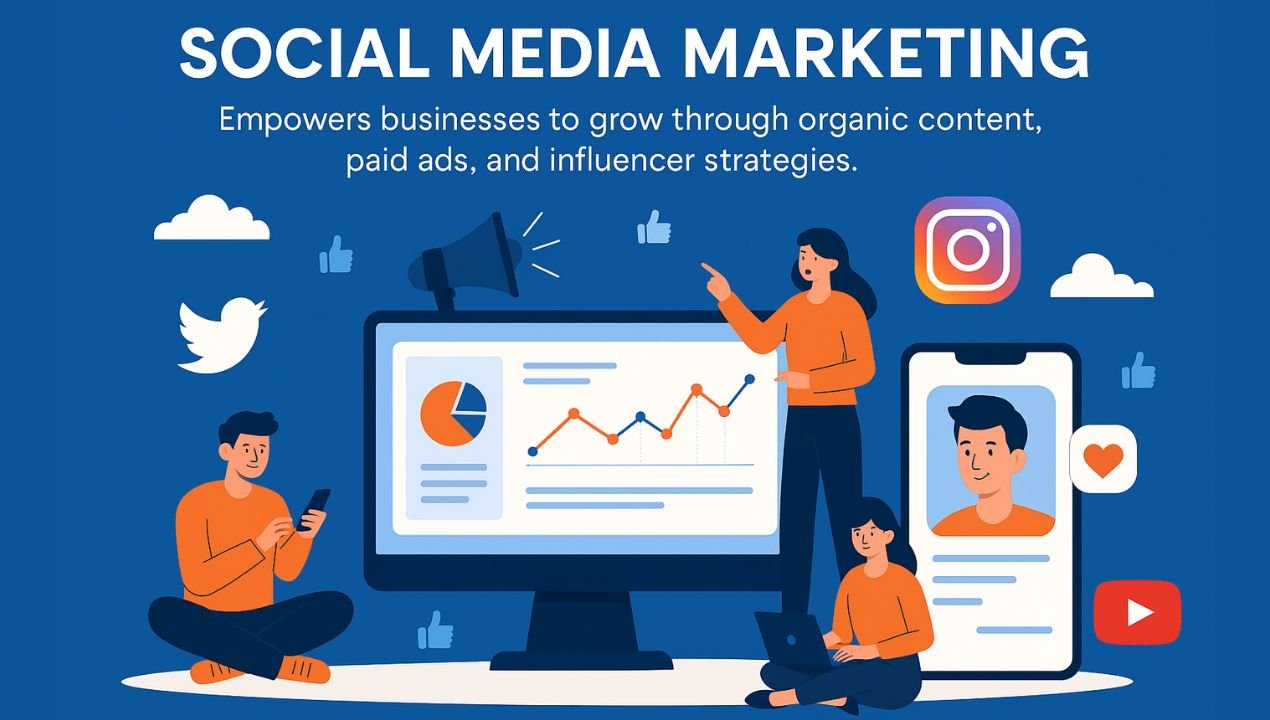
In today’s competitive digital world, trust is one of the strongest assets a brand can build. People no longer buy only because a product looks good or a service sounds useful. They buy because they believe in the brand behind it. That belief is what turns attention into action, followers into customers, and customers into long-term advocates. Social media marketing has become one of the most effective ways to build that belief at scale.
At Incredible Softwares, we see social media as much more than a promotion channel. It is a trust-building system, a visibility engine, and a long-term authority builder. A business may start with no audience, little recognition, and almost no digital footprint. But with the right social media strategy, it can gradually evolve into a trusted, respected, and influential brand in its niche.
This article explores how social media marketing helps a brand move from zero visibility to real authority, and why trust is the foundation of sustainable growth.
Why trust is the real currency
In the digital marketplace, trust matters more than reach, followers, or likes. A brand can have thousands of followers and still fail to convert if people do not trust it. On the other hand, a smaller brand with strong trust can often outperform larger competitors because its audience feels confident taking the next step.
Trust influences every stage of the buyer journey. It affects whether someone clicks a post, follows a page, reads a website, fills out a form, or makes a purchase. Without trust, even the strongest marketing campaign struggles to deliver results.
Social media plays a special role because it gives people repeated exposure to your brand in a casual, everyday setting. That repetition matters. Familiarity creates comfort, and comfort is often the first step toward trust.
Starting from zero
Every brand begins at the same point: nobody knows it yet. At this stage, the goal is not immediate sales. The goal is visibility, recognition, and consistency. Social media allows a new brand to begin showing up where its audience already spends time.
The early stage is about planting signals of credibility. You want people to notice your name, understand what you do, and begin to see your content as useful. Over time, this repeated exposure makes your brand feel more established, even if it is still growing behind the scenes.
For a new business, the challenge is not only being seen. It is being remembered. That is where thoughtful content, consistent posting, and a clear message make all the difference.
Consistency creates confidence
One of the clearest signs of a trustworthy brand is consistency. Brands that post regularly, keep their message aligned, and maintain a professional presence feel more reliable than brands that appear randomly.
Consistency builds confidence in several ways:
It shows the business is active.
It reinforces the brand identity.
It helps audiences remember what the brand stands for.
It creates a predictable experience.
When people see a brand consistently sharing helpful, relevant, and well-designed content, they start to assume the business is dependable in other areas too. That perception is powerful. It signals stability, professionalism, and long-term commitment.
Inconsistent social media activity, on the other hand, can create doubt. If a brand disappears for weeks and returns only to push sales, audiences may question how serious or established it really is. Trust grows when a brand shows up regularly with value, not just promotions.
Educational content builds authority
If trust is the foundation, authority is the structure built on top of it. One of the best ways to develop authority on social media is through educational content. When a brand teaches people something useful, it demonstrates expertise without needing to say “we are experts” directly.
Educational content can take many forms:
How-to posts.
Industry tips.
Short explainer videos.
FAQs.
Common mistakes to avoid.
Case studies.
Comparisons.
Step-by-step guides.
This type of content helps people solve problems, make better decisions, and feel more informed. As a result, your brand becomes associated with knowledge and reliability. Over time, the audience begins to see your business as a trusted source rather than just another company selling something.
At Incredible Softwares, we often encourage brands to think of social media content as a teaching tool. The more a brand helps, the more people trust it.
Human connection matters
People trust people. That is one of the biggest advantages social media offers. Unlike traditional advertising, social platforms allow brands to show personality, conversation style, and human presence. This makes the business feel more approachable and relatable.
A humanized brand is easier to trust because it feels real. It can share team moments, behind-the-scenes content, customer experiences, lessons learned, and even honest updates when things do not go perfectly. This kind of openness makes a business feel less like a faceless company and more like a group of people trying to help.
Human connection also comes through in the way a brand responds. The tone of comments, replies, and direct messages matters. A thoughtful, respectful reply can strengthen trust far more than a polished ad. People want to feel heard. Social media gives brands the chance to do exactly that.
Social proof reduces doubt
One of the fastest ways to build trust is to let other people speak for you. Social proof is a powerful trust signal because it shows that real customers, clients, or users have already had a positive experience with your brand.
Social proof can include:
Testimonials.
Reviews.
Client results.
Before-and-after examples.
User-generated content.
Case studies.
Screenshots of positive feedback.
Mentions by influencers or partners.
When prospects see other people endorsing your brand, they feel less risk. They do not need to rely only on your promise; they can see evidence. That evidence helps them move from curiosity to confidence.
Scaling trust becomes much easier when social proof is woven into your content strategy. A steady stream of customer stories and positive outcomes can make your brand feel established even during the early growth phase.
Transparency builds loyalty
Trust is not built by perfect branding alone. It is also built through honesty. Brands that communicate clearly and set realistic expectations often earn more loyalty than brands that overpromise and underdeliver.
Transparency on social media means:
Explaining what your business does clearly.
Being honest about timelines.
Setting realistic expectations.
Addressing questions directly.
Owning mistakes when they happen.
Avoiding misleading claims.
People appreciate brands that are straightforward. When a business is open about its process, pricing logic, or service limitations, it signals respect. That respect helps build long-term loyalty.
Transparency is especially important in industries where customers feel uncertain before buying. If your content helps reduce confusion instead of increasing hype, it will do a lot more for trust than flashy marketing ever could.
Engagement deepens relationships
Social media is not a one-way broadcast. It is a conversation. Brands that engage with their audience in a meaningful way create stronger relationships and, ultimately, stronger trust.
Engagement includes:
Replying to comments.
Answering direct messages.
Asking questions in posts.
Running polls and Q&A sessions.
Reacting to customer feedback.
Joining relevant conversations.
When people see that a brand listens and responds, they feel valued. That feeling creates a stronger emotional connection. Instead of being just another account in the feed, the brand becomes an active part of the customer’s experience.
This is one of the most underrated parts of social media marketing. A brand can have great content, but if it ignores its audience, trust will grow slowly. A brand that interacts consistently can build trust much faster.
Paid campaigns work better with trust
Many businesses think of social media ads as a shortcut to growth. In reality, ads work best when they are supported by trust. If someone sees an ad from a brand they do not know, they may scroll past it. But if they have already seen your content, recognized your name, and noticed your expertise, they are much more likely to respond.
That is why organic and paid social media should work together. Organic content builds familiarity and credibility. Paid campaigns then amplify that credibility to a wider audience.
A trust-based funnel often looks like this:
A person discovers your content.
They follow your page or engage with a post.
They see educational and social proof content.
They begin to trust your expertise.
They respond more positively to your ad or offer.
This combination is what makes social media scalable. You are not just reaching more people. You are building enough trust that more people are willing to take action.
Authority comes from repetition
Authority is rarely created in one moment. It is built through repetition. When a brand repeatedly demonstrates knowledge, consistency, and reliability, the audience begins to view it as a leader in its space.
A brand becomes authoritative when it:
Shares high-value content regularly.
Focuses on a clear niche.
Uses a consistent voice and visual identity.
Publishes results and proof.
Offers useful opinions and insights.
Shows up across multiple content formats.
The more a brand repeats its message with clarity and value, the more the market begins to remember it. Eventually, people stop seeing the brand as just another business and start seeing it as a trusted reference point.
That is the real goal of authority marketing: becoming the first name people think of when they need a solution.
Content variety strengthens trust
Different people trust different kinds of content. Some want numbers, some want stories, and others want visual demonstrations. That is why a strong social media strategy uses a mix of content types.
A balanced content mix may include:
Educational posts for clarity.
Customer testimonials for proof.
Behind-the-scenes content for authenticity.
Product or service highlights for conversion.
Thought leadership for authority.
Interactive content for engagement.
Short videos for reach and relatability.
This variety gives the audience multiple ways to connect with the brand. A person who ignores one post may be persuaded by another. A person who is unsure may become convinced after seeing both educational content and social proof.
The goal is not to post everything at once. The goal is to create a steady, intelligent mix that strengthens trust from different angles.
Data helps refine trust-building
At scale, trust-building should not be based on guesswork. Social media gives businesses useful data that reveals which content strengthens relationships and which content does not.
Important metrics include:
Engagement rate.
Shares and saves.
Click-through rate.
Comment sentiment.
Direct message response rate.
Conversion rate.
Follower growth over time.
These numbers tell a deeper story than vanity metrics alone. A post with high likes but weak conversions may not be building much trust. A post with fewer likes but many saves, shares, and positive comments may be doing a much better job.
By studying this data, brands can refine their strategy, strengthen the content that works, and improve how they communicate with their audience.
Scaling trust across platforms
A strong trust-building strategy does not have to live on one platform only. In fact, brands often grow faster when they build a presence across the platforms their audience uses most.
For example:
Instagram can show visual identity and culture.
LinkedIn can support professional authority.
Facebook can help with community and retargeting.
YouTube can build depth and long-form trust.
X can support thought leadership and quick interactions.
Each platform plays a different role, but the message should remain consistent. When people encounter your brand across multiple channels and see the same reliability, expertise, and personality, trust compounds more quickly.
This multi-platform presence creates the impression that the brand is established, active, and worth paying attention to.
A practical trust-building strategy
Brands that want to move from zero to authority should focus on a few core principles:
Post consistently.
Teach before selling.
Show proof of results.
Be honest and transparent.
Engage with the audience.
Use a clear brand voice.
Track what works and improve it.
These are not complicated ideas, but they are powerful when applied consistently. Trust does not come from one viral moment. It comes from repeated, meaningful interactions that make people feel confident in your brand.
If you build your social media around helping, communicating, and proving value, you will naturally move closer to authority.
Closing Remarks
Social media marketing is one of the most scalable ways to build brand trust in the modern business world. It helps a brand go from unknown to recognized, from recognized to trusted, and from trusted to authoritative. The process takes time, but the reward is strong: a brand that people believe in, engage with, and recommend.
At Incredible Softwares, we believe that trust is not a side effect of social media marketing. It is the main outcome. Every post, reply, review, and story contributes to how people perceive your brand. If those signals are consistent, helpful, and genuine, your brand can grow far beyond visibility.
The brands that win today are not simply the loudest. They are the ones that are clear, credible, and consistent. Social media gives them the stage. Trust gives them the power.