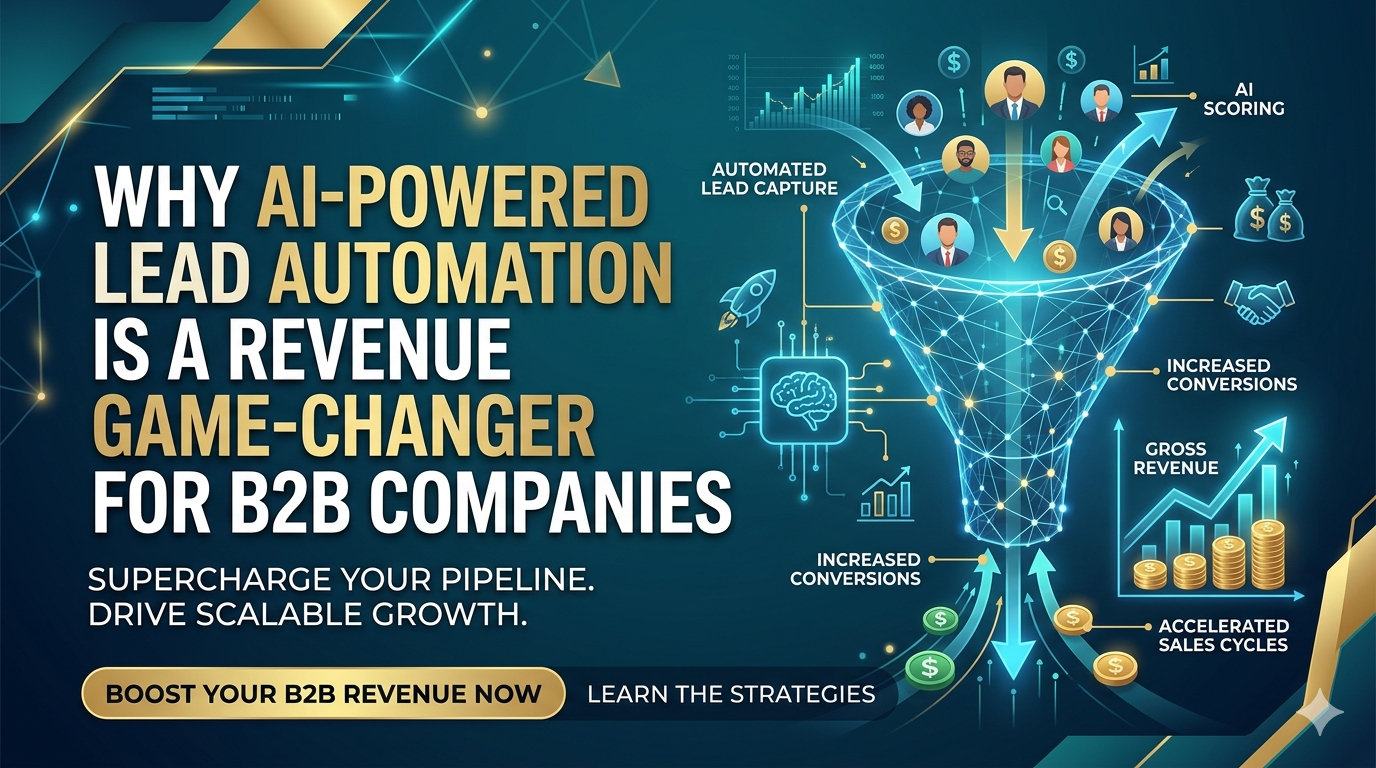
AI-powered lead automation is changing how B2B companies
generate, qualify, and convert leads. Instead of relying on manual follow-up,
scattered spreadsheets, and delayed responses, businesses can now use AI to
move leads through the pipeline faster, smarter, and with much higher
consistency.
For B2B companies, this matters because sales cycles are
longer, buying decisions involve multiple stakeholders, and lead quality has a
direct impact on revenue. When AI is used properly, it helps sales and
marketing teams spend more time on high-value opportunities and less time on
repetitive work.
Why AI-Powered Lead Automation matters
A traditional lead process often depends on people
remembering to call, email, assign, and track each prospect. That approach
works only at a small scale. As lead volume grows, delays start happening,
opportunities get missed, and conversion rates drop.
AI-powered lead automation solves this by:
- Capturing
leads instantly from forms, ads, landing pages, and chat.
- Scoring
leads based on behavior, profile, and intent.
- Routing
leads to the right sales rep automatically.
- Triggering
follow-ups based on actions and timing.
- Helping
teams predict which leads are most likely to convert.
This creates a faster and more organized revenue system.
How AI lead automation improves B2B sales
AI lead automation does more than save time. It improves the
entire revenue workflow.
1. Faster response times
The first business to respond usually has the best chance of
winning the lead. AI helps teams act immediately through alerts,
auto-assignment, and workflow triggers.
2. Smarter lead qualification
Not every lead is worth the same amount of sales effort. AI
can analyze form inputs, company data, engagement behavior, and interaction
patterns to score leads more accurately.
3. Better lead routing
Leads can be assigned based on region, service interest,
company size, or sales territory. This reduces confusion and prevents leads
from sitting idle.
4. More personalized nurturing
AI can help send more relevant follow-up messages based on
what the prospect viewed, clicked, or downloaded. This improves engagement and
keeps leads warm.
5. Higher conversion rates
When leads are responded to quickly, qualified properly, and
nurtured consistently, they are more likely to move from inquiry to meeting to
sale.
Roadmap for B2B companies using AI lead automation
If a company wants to use AI lead automation effectively, it
should follow a practical roadmap.
Step 1: Audit your current lead flow
Review how leads come in, who handles them, and where delays
happen. This shows where automation will have the biggest impact.
Step 2: Define lead scoring rules
Set rules based on source, industry, company size,
engagement level, and buying intent. AI works best when it has a clear
framework.
Step 3: Automate lead capture and assignment
Connect your website forms, ads, CRM, and communication
tools so leads move into the system instantly.
Step 4: Build nurture journeys
Create automated email and message sequences for leads who
are not ready to buy yet. This keeps them engaged without manual effort.
Step 5: Track performance
Monitor conversion rate, response time, appointment booking
rate, and revenue by lead source.
Step 6: Improve continuously
Use data to refine scoring, workflows, messaging, and sales
handoff.
Case Study
A B2B service company generating leads from paid campaigns
was struggling with slow follow-up. The sales team received leads in batches,
and many prospects lost interest before anyone contacted them.
After implementing AI-powered lead automation, the company
connected its ad leads to a CRM, created instant routing rules, and used
behavior-based scoring to identify high-intent prospects. The team also set up
automated follow-up emails and reminders for leads that were not ready to book
immediately.
Within a few months, the company saw better response times,
improved lead-to-meeting conversion, and stronger overall pipeline quality. The
biggest improvement was not just more leads — it was better conversion of the
leads they already had.
This is a realistic example of how AI automation can improve
revenue without requiring a huge increase in ad spend.
Benefits for B2B companies
AI-powered lead automation offers several practical
benefits:
- Saves
sales team time.
- Reduces
missed opportunities.
- Improves
lead quality.
- Increases
conversion rates.
- Supports
better forecasting.
- Improves
customer experience.
- Helps
marketing and sales work together more effectively.
For B2B companies, these benefits often translate into
stronger pipeline growth and better ROI.
Common mistakes to avoid
Many businesses fail with automation because they rely on
the tool without fixing the process.
Avoid these mistakes:
- Using
too many form fields.
- Waiting
too long to follow up.
- Sending
the same message to every lead.
- Ignoring
lead scoring data.
- Not
tracking conversion metrics.
- Automating
weak sales processes instead of improving them.
Automation works best when it supports a good strategy.
Frequentyl Asked Questions
What is AI-powered lead automation?
AI-powered lead automation uses artificial intelligence to
capture, score, route, and nurture leads automatically.
How does AI improve lead conversion?
AI helps businesses respond faster, qualify leads more
accurately, and send more relevant follow-up messages.
Is AI lead automation good for B2B companies?
Yes. It is especially useful for B2B companies because sales
cycles are longer and lead quality matters more.
Does AI replace sales teams?
No. AI supports sales teams by handling repetitive tasks so
people can focus on high-value conversations and closing deals.
What is the biggest benefit of lead automation?
The biggest benefit is better conversion from the leads you
already generate, which improves revenue efficiency.
If your business wants to improve lead quality, speed up follow-up, and convert more opportunities into revenue, AI-powered lead automation is one of the smartest investments you can make. It helps your team work faster, sell more efficiently, and create a more predictable growth system.
 Book a Free Trial